At a glance
- What it is
- Mining camp remains near the top of Red Mountain Pass, about 13 miles south of Ouray.
- The story
- In 1882 a hunter picked up silver-lead ore here. A month later the Yankee Girl claim, a hole about 20 feet deep, sold for $125,000.
- Getting there
- Visible from US 550, with a scenic overlook. County Road 31 loops past the old camps and needs high-clearance four-wheel drive. Respect private claims.
August 1882. A prospector named John Robinson is out hunting below Red Mountain Pass when he picks up a chunk of silver-lead ore about 300 yards from a claim he and his partners had already written off. A month later the hole is about 20 feet deep, and somebody pays $125,000 for it.
A 20-foot hole worth $125,000
Robinson and his partners had decided the surface ore on their Guston claim was too poor to ship. Then he found this rock while hunting. They packed 4,500 pounds of it to a smelter in Ouray, where it came back at 88 ounces of silver per ton. About a month later they sold the claim, which became the Yankee Girl Mine, for $125,000. In video game terms, he was on a side quest for dinner and the legendary drop landed at his feet.
People had tried for gold here in the 1870s, and one history says a camp called Sky City went up in 1879 on a swampy spot that flooded every spring. The real crowd came after the 1882 silver strikes.
Two newspapers, a railroad and a jail on bedrock
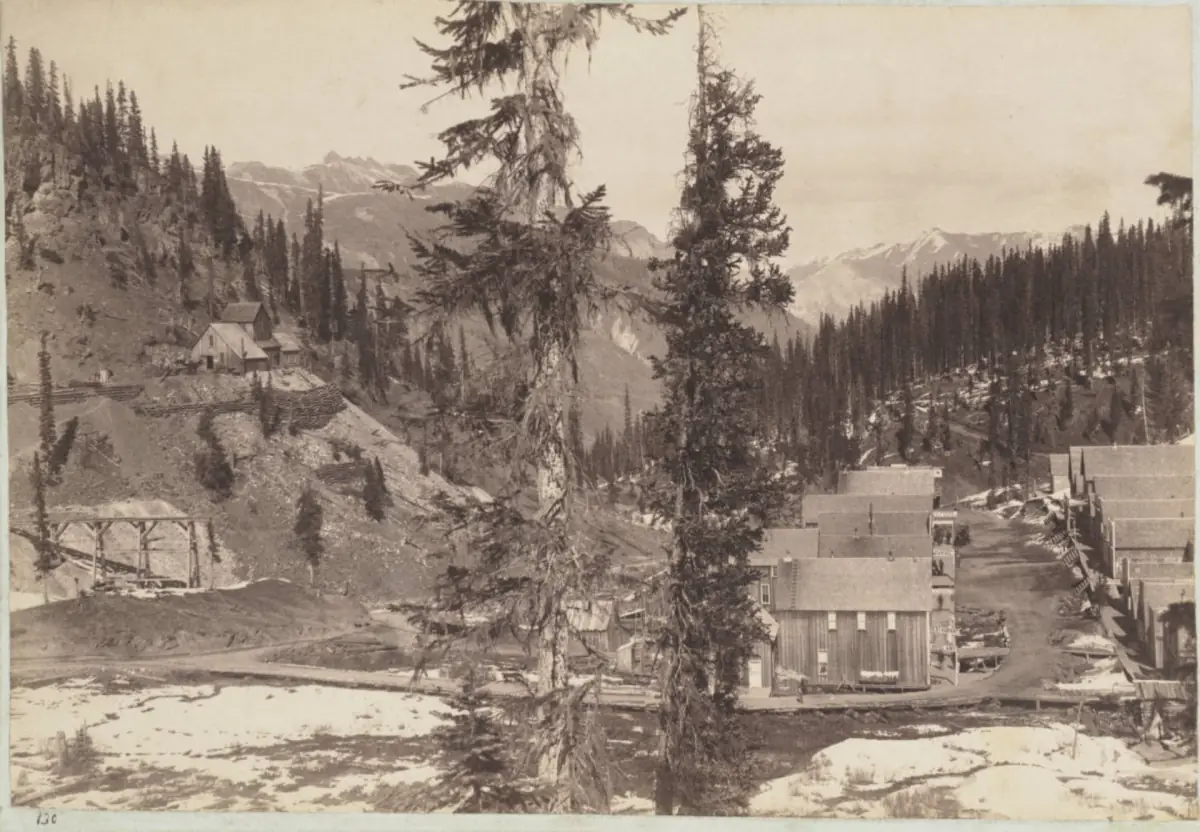
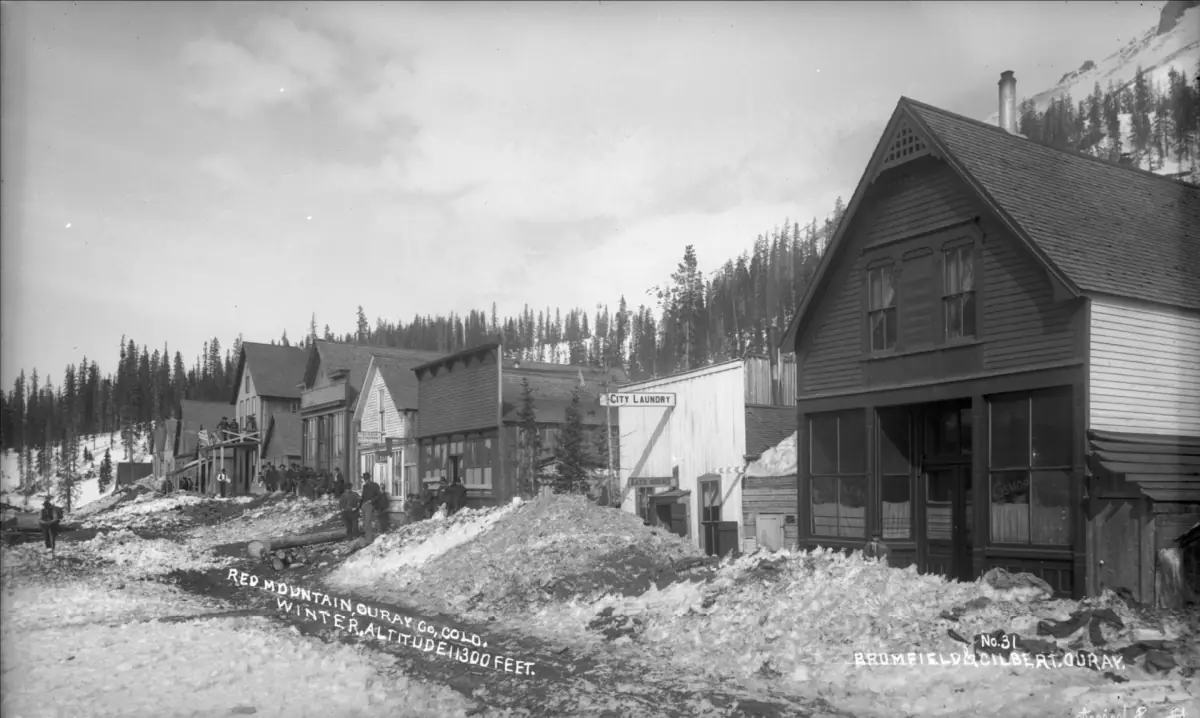
In January 1883 a post office opened as Red Mountain Town, next to Rogersville and Otto Mears' toll road. A rival called Red Mountain City sat less than a mile away over the pass, because one Red Mountain wasn't confusing enough. The town had two newspapers, the Excelsior House hotel and a two-story saloon called the Assembly Club.
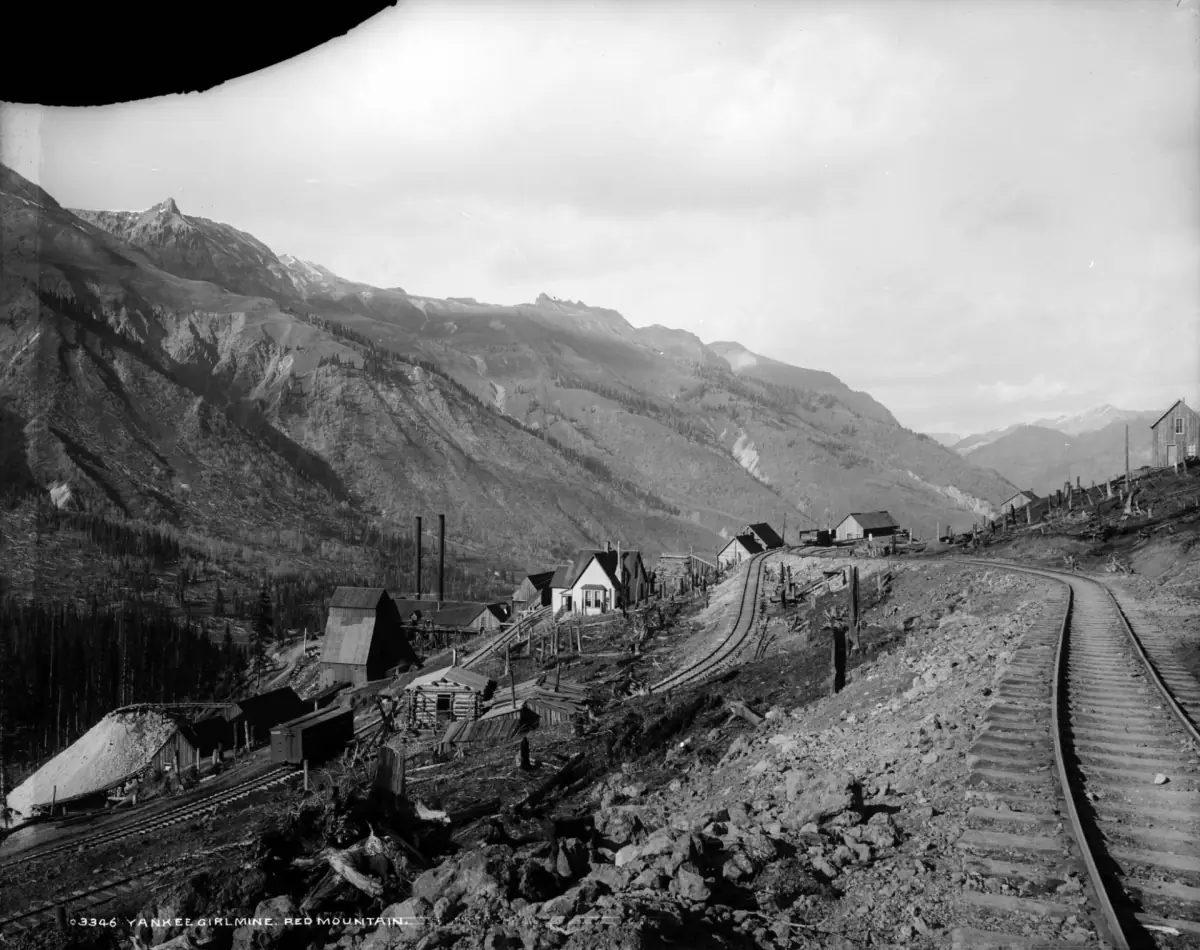
In 1884 mining engineer T. E. Schwarts took over the Yankee Girl. Over five years he sank it from 100 feet to about 1,000 and paid nearly $1,000,000 in dividends. Meanwhile Otto Mears built the narrow-gauge Silverton Railroad over the pass, and it reached Red Mountain Town in September 1888. Engineer Charles W. Gibbs put the depot inside a wye (a triangle of track that lets a train turn around) and built a covered 50-foot turntable at Corkscrew Gulch.
By 1890 the town had 598 residents, a telephone office, a school, plenty of saloons and a jail with no windows, built on bedrock. It peaked at more than 1,000 people. A Denver paper summed up the mood.
Red Mountain was the mecca for all who were allured into the San Juan by the fickle goddess of fortune.Denver Times, as quoted by Legends of America (issue date not found)
The church Red Mountain Town turned away
In 1892 Red Mountain Town turned away an English Congregationalist preacher, the Rev. William Davis. Guston, just down the road, built him the district's only church. The day after it opened, Red Mountain Town's business district burned. One history puts the fire in August 1892, starting in the Red Mountain Hotel's kitchen. It took all 15 buildings on Main Street except the depot and the jail.
Some locals called it divine intervention. If you grew up in youth group, you know this feeling. You skip Sunday, something goes wrong Monday, and a lady from the choir looks at you a little too long. This was the whole-town version. And the jail made it. Of course the jail made it. It was built on bedrock.
Silver crashes and the town empties
In 1893 silver was demonetized (the federal government quit buying it to back money), and the National Belle mine closed. The town dropped to 40 people in 1896 and 12 in 1899. A 1901 merger of the National Belle, the Guston and about a dozen other mines gave it a short second wind. More fires came in the mid-1890s, and a 1939 forest fire was the last. The Silverton Railroad came out in the 1920s (sources say 1922 or 1926).
In total the district produced upwards of $30 million in metals, second in Colorado only to Leadville in its heyday. Then the weather went to work on what was left.
On the endangered list in 2000
The rescue started with the Red Mountain Project in 1998. On June 26, 2000, the National Trust for Historic Preservation named Red Mountain one of its 11 most endangered historic places. Colorado Preservation says over 8,500 acres are now protected and 24 historic structures have been stabilized. Not every save stuck. Two stabilized buildings, the Kohler/Longfellow Boardinghouse and the mine manager's house, were torn down by the property owner without a permit. Saved, then gone.
Visiting Red Mountain Town today
Red Mountain Town is about 13 miles south of Ouray, and you can see the remains from near the top of Red Mountain Pass on US 550. County Road 31 leaves the highway about 12.7 miles south of Ouray and loops past Guston, Ironton and the Yankee Girl. Corkscrew Gulch climbs out of the same area toward Silverton. Look for the National Belle headframe (the tall frame over a mine shaft), a leaning cabin and mounds of yellow tailings. The Yankee Girl headframe stands over a 1,200-foot shaft. It's private, but a conservation easement now protects it from demolition.