At a glance
- What it is
- A ghost town at about 11,200 feet, where mountain streams meet to form the Animas River. About 450 people lived here in 1883.
- The story
- A 23-day blizzard in 1884 buried it in 25 feet of snow. Nine buildings are restored, including the jail, and you can go inside.
- Getting there
- About 13.5 miles from Ouray on US 550 and County Roads 18, 17 and 2. Plan on high clearance. Best May to October.
In 1883, Animas Forks had about 450 people, its own newspaper, and a hotel with the only telephone in town. It sat at about 11,200 feet, right where several mountain streams come together to make the Animas River, and it fully planned to stick around. Today the population is zero, and the oldest building still standing is the jail.
Three forks and one bad trail
So in 1873, prospectors build the first log cabin at the spot. They call the camp Three Forks of the Animas, which is accurate and a mouthful. When the post office opens on February 8, 1875, the name gets trimmed to Animas Forks. That same year Otto Mears builds a wagon road to link it with the other mining camps. He had to, because a newspaper from 1875 described the way in like this:
from Eureka up to the Forks of the Animas, we have only a trail, and not a very good one at that.Unnamed newspaper article, 1875, quoted by Western Mining History
That is the 1875 version of Dad promising the shortcut is basically a road. People came anyway. By Colorado statehood in 1876 the town had about 30 cabins, a hotel, a general store, a saloon and a post office. Then in March 1877 a snowslide wrecked the brand-new smelting works, a sawmill and 3 cabins, a loss estimated at $30,000. Welcome to the neighborhood.
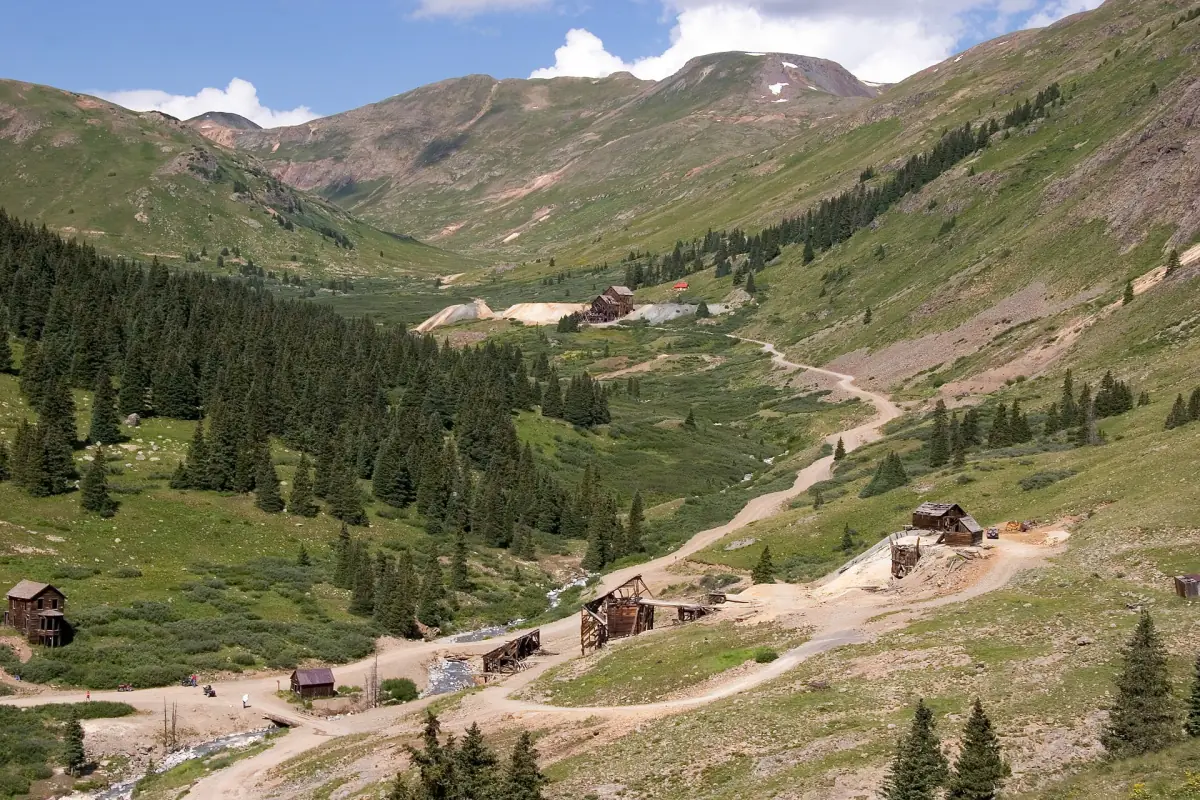
The town that moved to Silverton every winter
In 1879 the Kalamazoo House opened as the grandest hotel in town, with the only telephone. Animas Forks incorporated in 1881 and ran its own paper, the Animas Forks Pioneer, from 1882 until October 1886. It built a jail too. By 1883 about 450 people lived here.
Here is my favorite part. Every fall, the residents packed up and moved down to Silverton for the winter. En masse. Picture 450 people doing the family road trip load-out on the same morning, every wagon packed to the roof, all of them headed about 12 miles down the valley to wait out the snow. A guidebook writer in 1885 understood why:
in the midst of wild and rugged country, where nothing but rich mines would ever induce a human being to live longer than necessary.Crofutt's Grip-sack Guide of Colorado, 1885
A few people stayed anyway. William Duncan built a two-story house with a big bay window in 1879, and he is described as one of the first miners to live in Animas Forks year-round. His house still stands and is called the best-preserved building in town. You will hear it called the Walsh House, after Thomas Walsh of the Camp Bird Mine, but HistoryNet says there is no evidence Walsh ever lived there. Duncan built it. Duncan gets the credit.
The people who stayed paid for it. In 1884 a blizzard lasted 23 days and buried the town under 25 feet of snow, and residents dug tunnels to get from one building to the next. Twenty-five feet. Of snow. In October 1891 a fire started in the kitchen of the Kalamazoo House and destroyed the hotel and 14 buildings, about $20,000 in damage. The town rebuilt, and then the silver crash of 1893 knocked it flat again.
A steel mill that came and went like an afternoon storm
Animas Forks got one more big shot. The Silverton Northern Railroad reached town (sources split between 1896 and 1904), and around 1904 to 1905 the Gold Prince Mill went up. It had 100 stamps, handled 500 tons of ore a day, and was fed by a 12,600-foot aerial tramway. It is described as the first mill in Colorado built of structural steel and the largest in the state. Western Mining History puts its cost at about $500,000 and calls it mostly a failure.
If you have spent a July afternoon in the San Juans, you know the storm that builds over the peaks at lunch, booms like the end of the world, and is gone by dinner. That was the Gold Prince. It closed in 1910. The post office shut for good on November 30, 1915. In 1917 workers pulled most of the big machinery out of the mill and hauled it to a new one at Eureka, which Wikipedia calls "the beginning of the end for Animas Forks." By the 1920s it was a ghost town.
Saving a town nobody lived in
Then the story flips. In 1997 and 1998, a Colorado State Historical Fund grant to San Juan County, working with the Bureau of Land Management, paid to stabilize the buildings. A 2009 land swap made the BLM the sole owner. The townsite went on the National Register of Historic Places in 2011. About $330,000 in grants paid for a two-phase restoration, finished in 2014 and overseen by David Singer of Silverton Restoration Consulting.
Visiting Animas Forks today
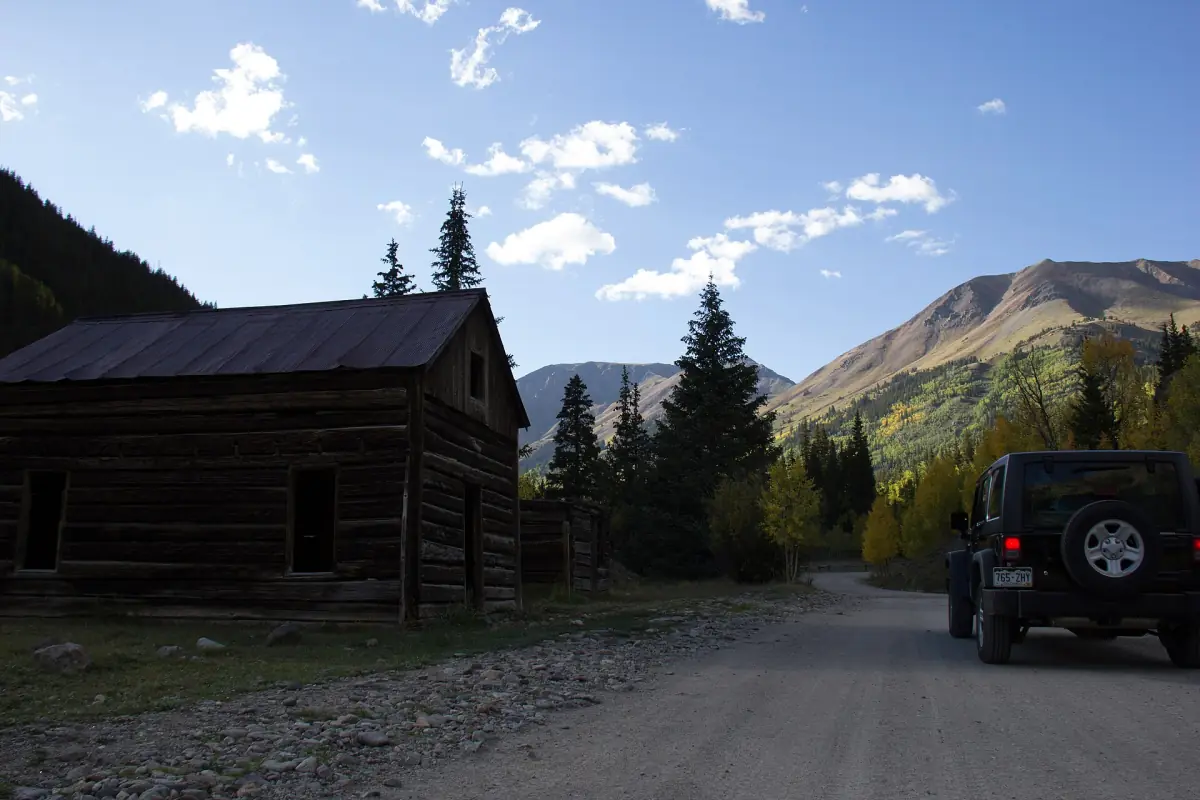
Animas Forks is a stop on the Alpine Loop, at the point where the road starts climbing toward Engineer Pass. From Ouray it is about 13.5 miles: south on US 550 for 4.3 miles to County Road 18, then County Roads 18, 17 and 2. One guide rates some of those sections for expert four-wheel-drive drivers only. The road up from Silverton is easier, though the BLM and Wikipedia disagree on whether a two-wheel-drive car can make it.
Nine buildings stand, stabilized and restored, including the Duncan House and the jail, and you can walk right in. The BLM keeps brochures and maps at the parking area. One estimate puts visitors at about 250,000 a year, and the same report found pried nails and broken windows. So be decent. These buildings already lived through a 23-day blizzard. They should not have to live through us.
A town of about 450 people used to leave every fall. Now about 250,000 come up to see it every year, and the town finally gets to stay put.