At a glance
- What it is
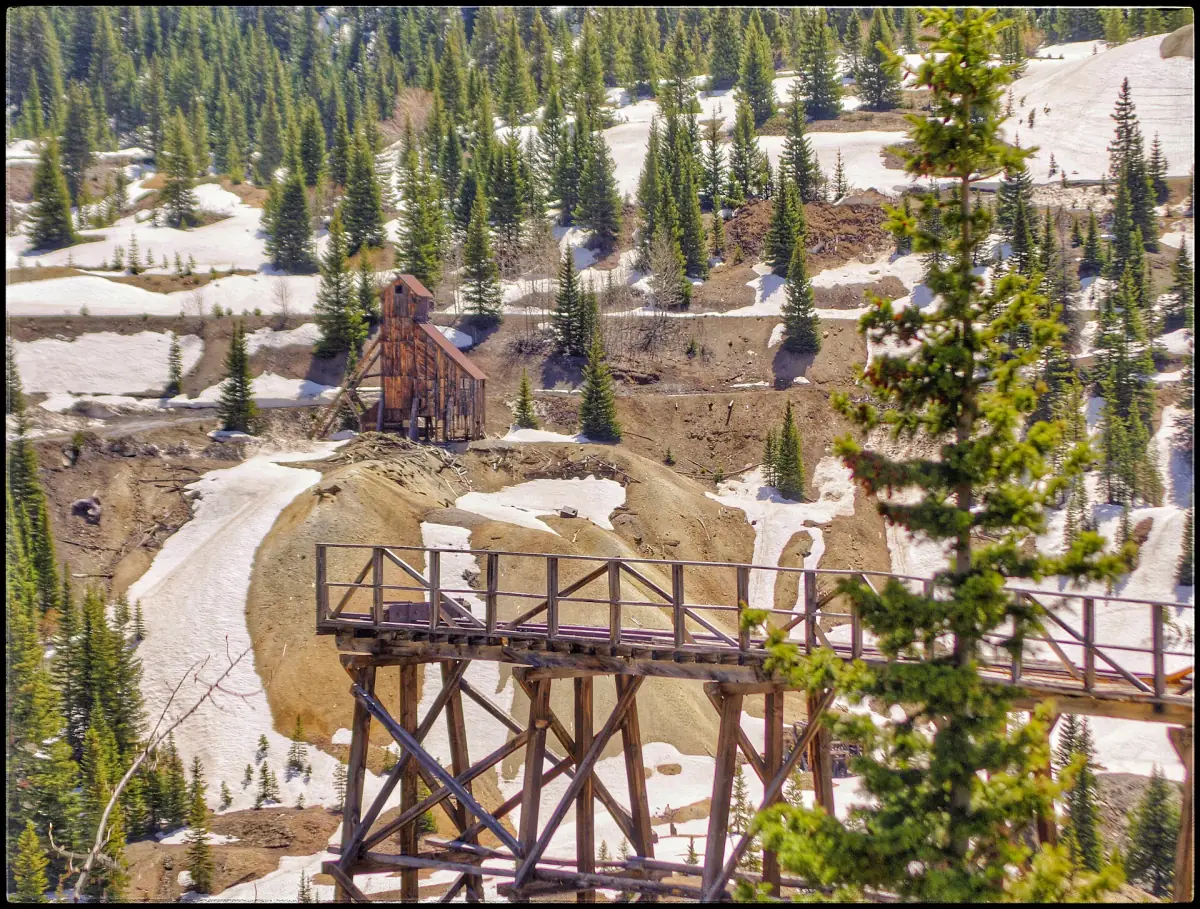
- A mine portal and wooden trestle on US 550, north of Red Mountain Pass.
- The story
- The tunnel was a flop for about 40 years, then carried Colorado's second-biggest mine until it closed in 1978.
- Getting there
- Visible from US 550, so no off-road vehicle is needed. The land is private, so view it from the highway or pullouts.
For its first 40-odd years, the Treasury Tunnel was a flop. It was a hole about 2,000 feet into Red Mountain, dug to find a rich vein that never showed up, then left in the dark like a depot on a rail line nobody finished. Then it got a second chance and ended up carrying the second-biggest mine in Colorado.
William Hammond's 2,000-foot hunch
So in 1896, a mine developer named William Hammond Jr. forms the Treasury Tunnel Mining and Reduction Company. His idea is simple. He believes a hidden vein runs through the mountain between the Red Mountain mines and the Telluride mines, and if you dig straight in, you hit it.
He digs about 2,000 feet. He finds some ore. He never strikes it rich. After about 10 years the tunnel is abandoned, and that's where our hero spends the next few decades: a cold, wet, perfectly good tunnel with nothing to do.
Those numbers come from a single source, and it says "about" for both. So read them that way.
A geologist and a world war come knocking
Fast forward to 1939. Fred Searls, the lead exploration geologist for Newmont Mining, looks at the old Treasury Tunnel and sees a back door. Behind it sit the Barstow and Black Bear mines, which still hold large reserves of lead and zinc. Reopen the tunnel, push it deeper, and you can reach them from underneath. Reusing somebody else's failed tunnel to sneak in under two old mines? Gangster.
Newmont teams up with Sunshine Mining of Wallace, Idaho, and they name the venture Idarado after the partnership. Nobody spells out the math for me, but Idaho plus Colorado is sitting right there.
Then World War II rolls over the mining business like a hailstorm. War Production Board Order L-208 shuts down gold mines, and the government's Domestic Metals Procurement Program starts paying for base metals, the plain workhorse metals like lead and zinc.
In June 1943, the federal government leases the Idarado and pays to push the Treasury Tunnel another 7,000 feet, so it comes in beneath the old Black Bear workings. Miners then raise (dig upward) a 600-foot shaft to drain them. Picture it from the tunnel's side. You sit unwanted for 30-some years, and then the United States government pays for a 7,000-foot extension. That's a comeback.
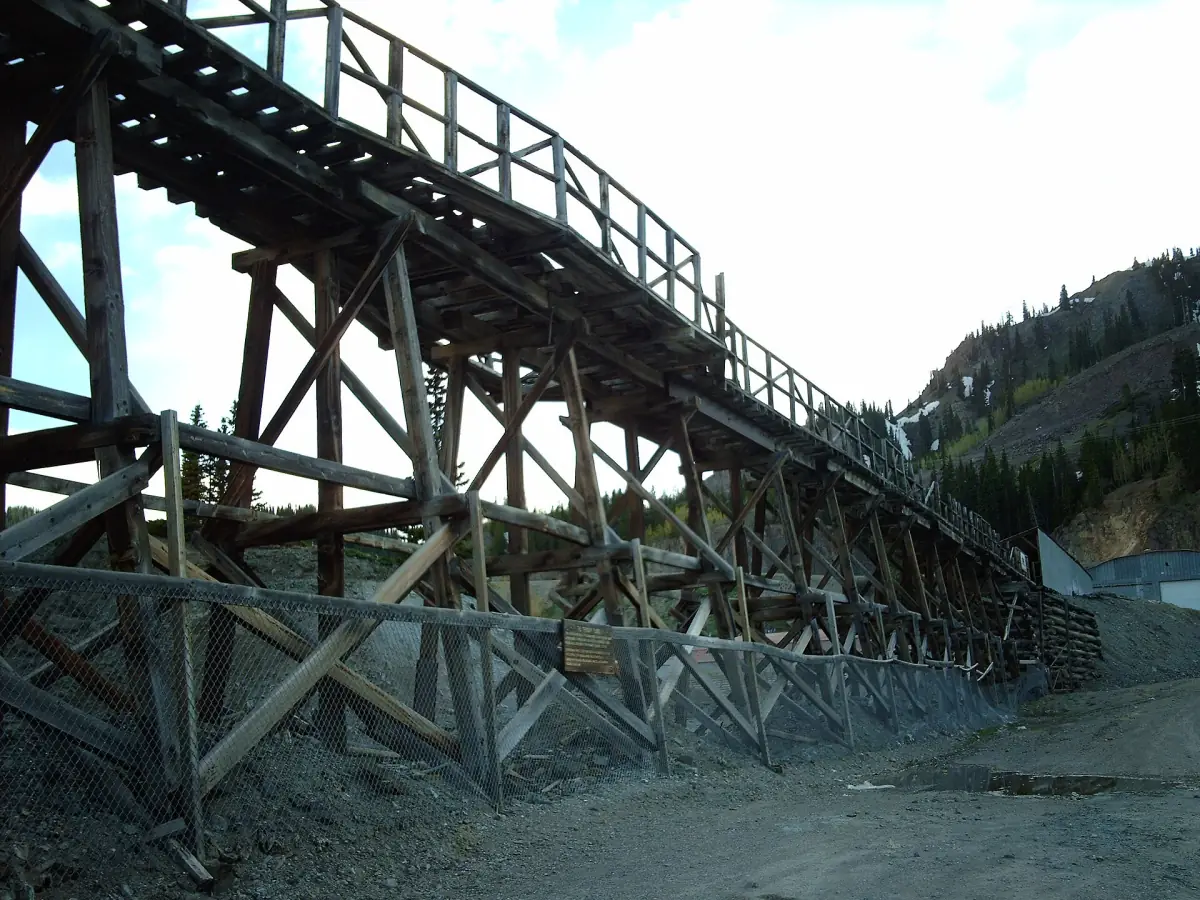
A year later, in June 1944, Newmont buys the lease back and repays the cost. By January 1945 a 250-ton-a-day mill is running, and its tailings (the ground-up waste left after milling) flow across a suspension bridge toward the old Ironton townsite.
Five miles under the mountain to Telluride
In 1953, Telluride Mines Inc., owner of the Smuggler-Union and the Pandora mill, announces it will close in April and lay off all 230 workers. Just before the closing date, Newmont buys everything it owns. The two sets of workings get joined, and now miners can pass all the way through the mountain from the Red Mountain side to Telluride.
Here's the part I love. Underground, that trip is about 5 miles. By highway it's more than 60. The tunnel nobody wanted is now the express line, and the long way around is more than twelve times farther.
In 1956 Newmont refits the Pandora mill near Telluride and shuts the remote Treasury mill on Red Mountain Pass. That mill burns down shortly afterward. Wikipedia calls the timing "fortunate." I'll just leave that word there.
By 1959 the Idarado produces 400,000 tons of ore a year. In 1973 and 1974 it runs around the clock and blasts through 80,000 pounds of dynamite a week. Eighty thousand. Every week. In 1974 it has sales of about $21 million, mostly from lead, zinc and silver, and more than 500 employees. That makes it Colorado's second-biggest mine, behind only Climax.
Closing day was September 30, 1978
The end comes fast. 1975 is the last profitable year. Both smelters that take the mine's ore, in Leadville and Corpus Christi, close, and the rich ore body found in 1973 runs out. The mine closes for good on September 30, 1978.
The cleanup is slower. Work on the tailings ponds near the mine and near Ironton starts in the 1980s. In 1987 the owners are fined a record $69,000 over toxic leaks, and by 1998 the state is starting a $20 million cleanup. In 2000, the company agrees to sell 3,200 acres for public land. Its vice president put it this way:
We're writing the final chapter for Idarado miningRichard River, Idarado vice president, High Country News, 2000
Visiting the Idarado Mine and Treasury Tunnel today
You don't need a trail to see this one. The tall wooden trestle at the Treasury Tunnel portal is visible from US 550, the Million Dollar Highway, north of Red Mountain Pass near the old Guston site. It sits between the Corkscrew Gulch and Black Bear Pass trailheads, so it's an easy stop on the way to either.
Look for the old tailings ponds just off the highway too. Today they're flat, grassy meadows, which is about the calmest thing a mine has ever left behind. The land is private, so enjoy it from the highway and public pullouts.
If you drive Black Bear Pass, you finish near the Pandora Mill on the Telluride side of the same mine. You crossed the mountain the hard way, over the top. The tunnel everybody gave up on made that same trip underneath you, years ago.