At a glance
- What it is
- The gold mine that made Thomas Walsh rich, about six miles south of Ouray.
- The story
- Gold sat untested in an old tunnel for 12 years until Walsh sampled it in 1896. He sold the mine in 1902 for a reported $5.2 million.
- Getting there
- On the Camp Bird Road, rated easy. Private property, so view the lower mill buildings from the road. Closed December 1 to April 30.
September 1896. Thomas Walsh climbs into the abandoned Gertrude tunnel in upper Imogene Basin and breaks off samples at the very end of it. The test in Ouray comes back at several ounces of gold per ton, from rock the previous owners had dug into in 1884 and never bothered to check.
Twelve years of gold nobody tested
The best part of the Camp Bird Mine story happened before Walsh ever showed up. In 1877 and 1878, prospectors William Weston and George Barber located a claim on the only outcrop of the vein at the head of Imogene Basin. The Reed brothers, H. W. and Caleb, took the Una claim, and the Gertrude claim sold to the Allied Mines Company in 1878.
In 1884, to qualify for a patent (the paperwork that turns a mining claim into land you own), the owners pushed the Gertrude drift (a tunnel that follows the vein) 10 more feet. The last two or three feet broke into rich ore. Nobody assayed it (ran the lab test for how much metal is in the rock), because the digging was only for the legal requirement. Somebody brought the best dish to the potluck, and nobody lifted the foil for twelve years. T. A. Rickard, the mining editor who told the story in 1903, wrote the lesson down:
Moral : Never fail to test the ore of a drift which is penetrating into new ground, and never assume that ore is poor because it looks like ore you know to be poor.T. A. Rickard, Across the San Juan Mountains, 1903
The wrong pink rock
Thomas Walsh was born April 2, 1850, in Tipperary, Ireland. He came to the United States in 1869, worked as a carpenter, got to Leadville in 1877, and by 1894 had organized the company that built a smelter at Silverton. He spent years poking through abandoned mines, betting that old workings still held gold other people had skipped.
In July 1896, while checking on his low-grade Hidden Treasure mine, Walsh noticed pink spar in the rubble below the cliffs. He took it for fluorite, which reminded him of Cripple Creek. It was rhodochrosite, a different pink mineral. Rickard's verdict: "It was rhodochrosite ; but no matter." That is a carpenter grabbing the wrong bracket off the hardware store shelf and still building the best deck on the street.
In September he sampled the old Gertrude drift. Assays in Ouray, then Leadville, confirmed the gold. One trail history reports a single assay of $3,000 a ton. Walsh spent the rest of 1896 quietly buying up the neighboring claims. Years later, his daughter Evalyn remembered what he told her:
Daughter, I've struck it rich!Thomas Walsh, 1896, as remembered by Evalyn Walsh McLean in Father Struck It Rich, 1936
Four hundred beds and an 8-hour day
The name comes from the "camp birds" that stole miners' lunches. Wikipedia says they were probably gray jays, and other histories say ravens. Every kitchen has one roommate who eats your leftovers. The San Juans had a whole flock of them, and they got a gold mine named after them.
By 1899 an aerial tram carried ore to a mill a couple of miles down the mountain, and a post office was open (it ran from 1898 to 1918). That year the company built a boarding house for 400 men, and the Ouray paper, the Silverite-Plaindealer, called the place "The Greatest Gold Mine in Colorado or the Whole Earth." More than 200 men were working there by year's end. Camp Bird was one of the first Western mines with an 8-hour day, and by the end of 1900 it held 103 claims covering 941 acres. Over the ridge in Telluride, mill workers would go on strike for that same 8-hour day in 1903.
On October 2, 1899, two masked men tried to rob a stage carrying $12,000 in gold bullion from the Camp Bird mill. They never found the gold. On October 14, Deputy Sheriff George Kinchen killed one of the robbers, John "Kid" Adams, near Norwood.
Walsh leaves while the pot is still full
In 1902 Walsh sold to a London syndicate for a reported $5.2 million. Walsh told the Silver Standard a bigger number: $6,000,000, with $3,200,000 of it in cash. From 1902 to 1916 the new owners took out $23 million in ore. In March 1906 a double avalanche destroyed the mill and the boarding house and killed one man. A new mill went up quickly.
Walsh died April 8, 1910, in Washington, D.C. His daughter Evalyn had married Edward "Ned" McLean, heir to the Washington Post fortune, in 1908. In 1911 Ned and Evalyn bought the 45-carat Hope Diamond from Pierre Cartier, reportedly for $180,000. So the Hope Diamond ended up with the daughter of a man who once mistook one pink rock for another.
Visiting Camp Bird Mine today
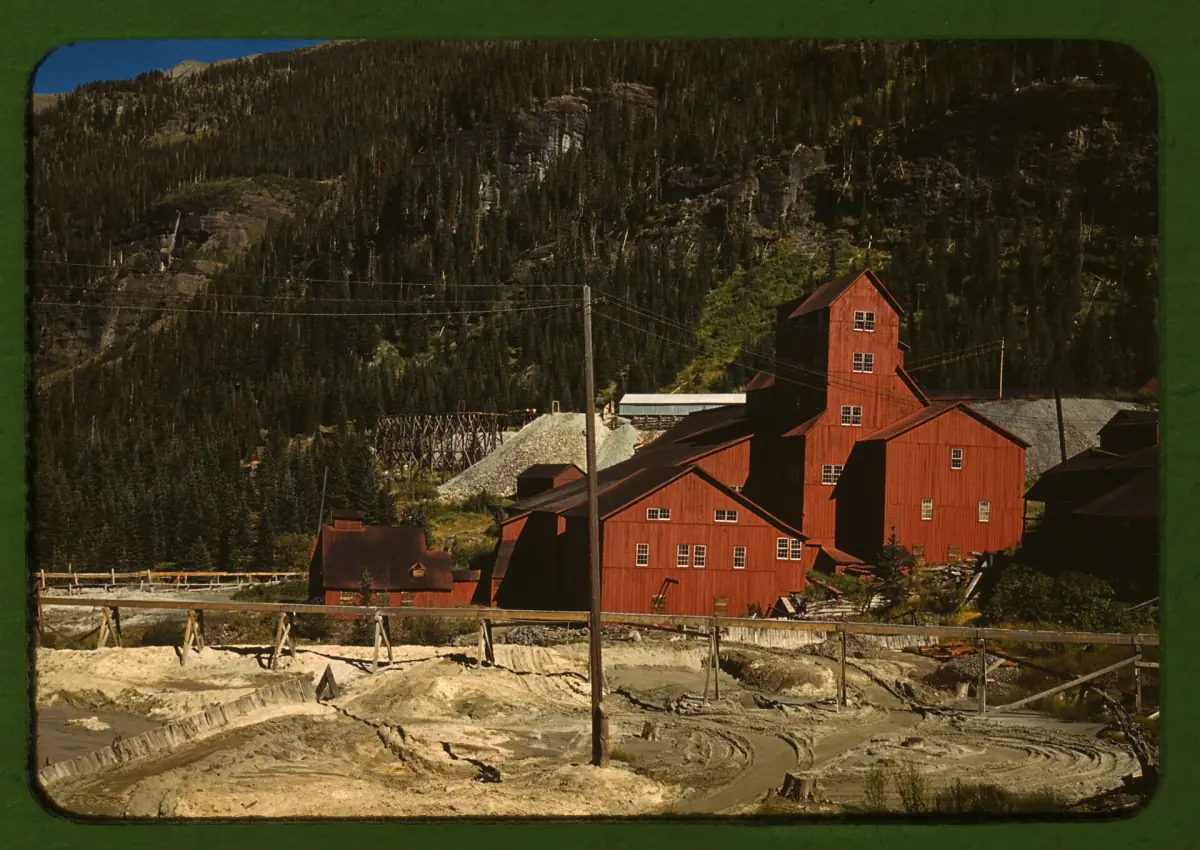
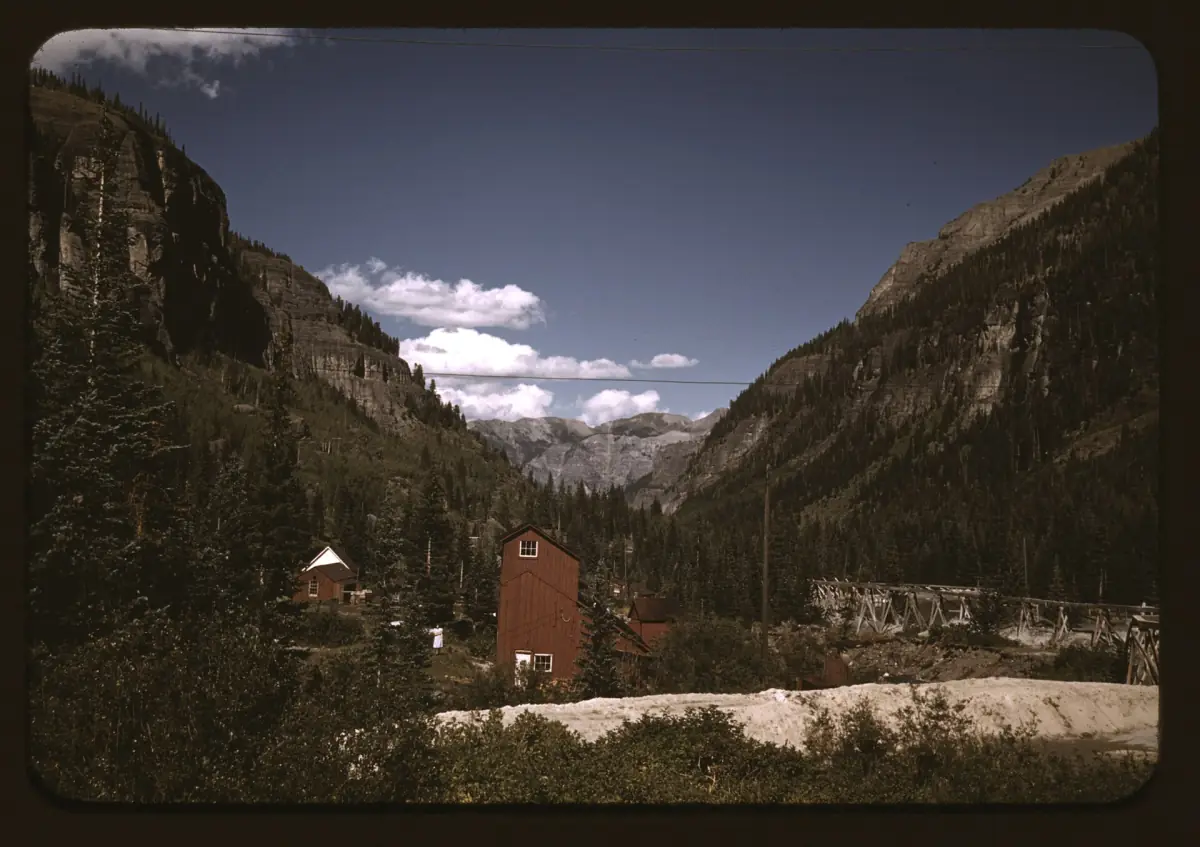
From 1896 to 1990 the mine produced about 1.5 million troy ounces of gold and 4 million troy ounces of silver. Today Camp Bird Mine is private property, and it is posted. You pass it about six miles south of Ouray on the Camp Bird Road, the way up to Yankee Boy Basin and Imogene Pass. The lower mill site still has some buildings, including the superintendent's office and company housing. Most of the rest has been cleaned up and the equipment hauled off. In 2017 the Environmental Protection Agency and the state signed an order with Caldera Mineral Resources, which bought the property out of bankruptcy, to control erosion and keep contaminated soil from washing downstream.
Stop where it is legal, look up toward Imogene Basin, and think about that tunnel. The gold sat there for twelve years because nobody tested a rock.