At a glance
- What it is
- The town at 7,792 feet that's the base for Camp Bird Road, Yankee Boy Basin, Imogene, Engineer and Black Bear.
- The story
- Prospectors staked claims here in 1875, and the town is named for the Ute chief Ouray. C. W. McCall, the singer of "Convoy," later served as mayor.
- Getting there
- On US 550, about 40 miles south of Montrose. Box Cañon Falls, the hot springs pool and, in winter, the free Ice Park are in town.
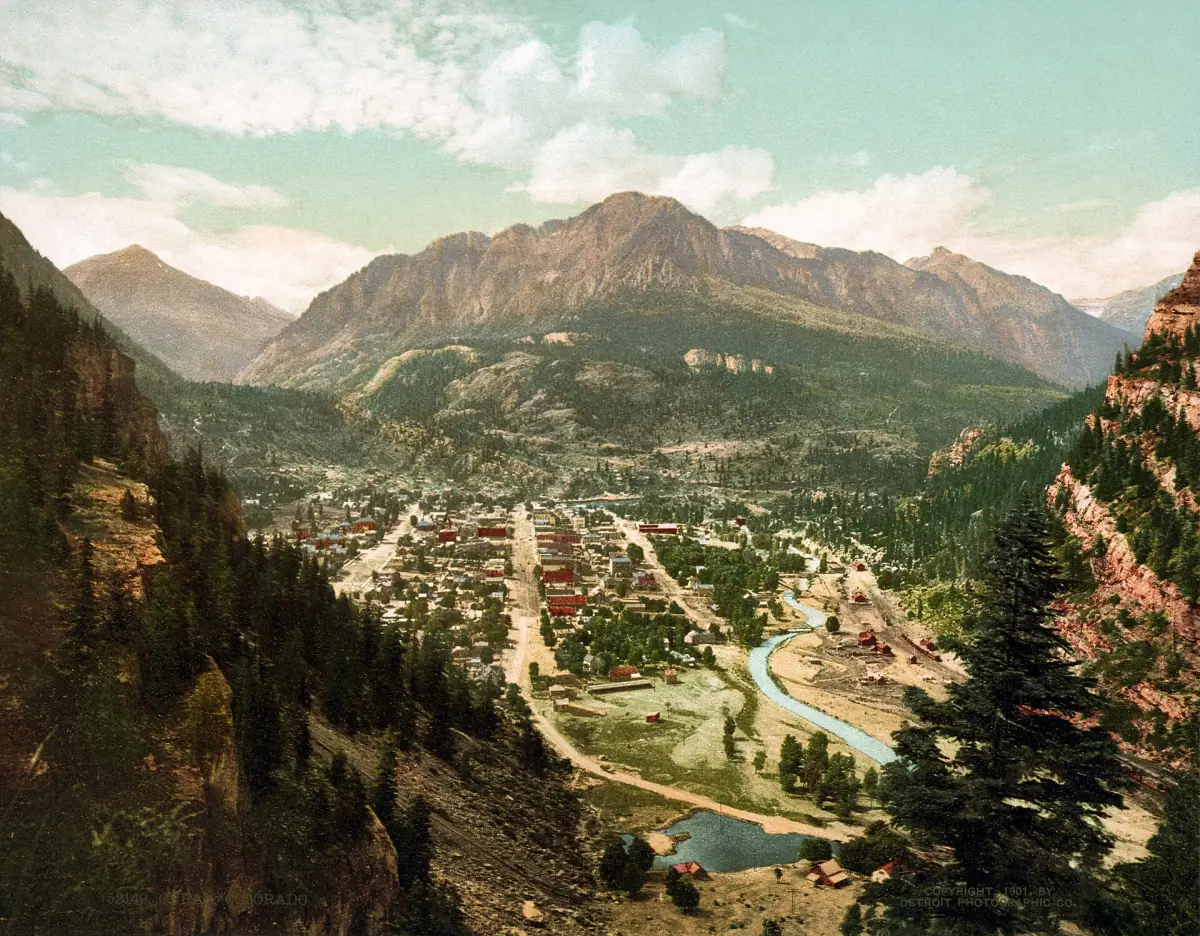
July 1875. Two prospectors, Gus Begole and John Echols, come down the Uncompahgre River into a hidden park ringed by cliffs and start staking claims. Two years earlier, the 1873 Brunot Agreement had taken these mountains from the Ute, and the town those claims started would carry the name of the Ute chief who helped negotiate it.
The Mineral Farm and a place called Uncompahgre City
Begole and Echols (some sources spell it Eckles) made the first recorded claims in the valley, including one called the Mineral Farm. I love that. Two guys in a cliff-walled canyon name a mining claim like they're planting a row of sweet corn. The same year brought the Trout, Fisherman, Cedar and Clipper discoveries. The Ouray County Historical Society calls the two men the "fathers of Uncompahgre City," which is what the place was called first.
On October 2, 1876, Uncompahgre City incorporated as Ouray, with about 400 residents. The first town trustees met two days later in Hagerty's cabin. On March 8, 1877, Ouray became the seat of the new Ouray County.
Chief Ouray, the man the town is named for
Ouray was born around 1833 near Taos and raised Catholic. He spoke Ute, Apache, Spanish, English and sign language, and he used them at the treaty table. In 1860, at 27, he became chief of the Tabeguache band, also called the Uncompahgre Ute. Around that same time, his five-year-old son was taken in a Sioux attack near Fort Lupton. He never saw the boy again.
He chose negotiation over war. He helped work out the Treaty of Conejos and the Treaty of 1868, traveling to Washington and meeting President Lincoln. When silver turned up in the San Juans in 1873, the Brunot Agreement, made with Ouray's help, handed the mineral-rich mountains to the United States. Not everyone among the Ute agreed with that path. In 1874 his own brother-in-law tried to kill him with an axe over the treaties.
If anybody in this story deserves a roast, it's the treaty-makers in Washington. They had a very consistent negotiating style. Every new agreement came with a smaller map for the Ute.
In 1880, after the Meeker Massacre, Ouray traveled to Washington one more time for a final treaty. President Hayes described him this way.
the most intellectual man I've ever conversed with.President Rutherford B. Hayes, on Chief Ouray, 1880, as quoted on Wikipedia
Ouray died that August near the Los Piños Agency. In 1881 the government forced the Uncompahgre Ute onto reservations in Utah. The town in the valley kept his name.
The Battle of the Boards and a doctor with a pet bear
Back in town, local government got off to a rough start. In April 1877 came what the historical society calls the "Battle of the Boards." Even with whiskey bribes and intimidation going around, voters elected five new trustees. The old board refused to give up their seats. Picture a youth group election where the outgoing president won't hand over the binder, except the binder is a mining town.
Then there's William "Doc" Rowan, an early doctor and three-time mayor. He kept a pet bear. He belonged to seven lodges. He played second base for the town baseball team. A doctor and mayor with a bear at home and a spot in the infield is gangster.
It helps to know Ouray once had more horses and mules than people. In a straight vote, the barn would have won.
When the silver money ran out
The Denver & Rio Grande railroad reached Ouray on December 21, 1887. By 1890 the town had 2,789 people. Then the 1893 silver crash hit, and most of them left. Gold was a different story. Thomas Walsh opened the Camp Bird Mine in 1896, and by 1902, when he sold it to a British firm, it had produced almost 200,000 ounces of gold.
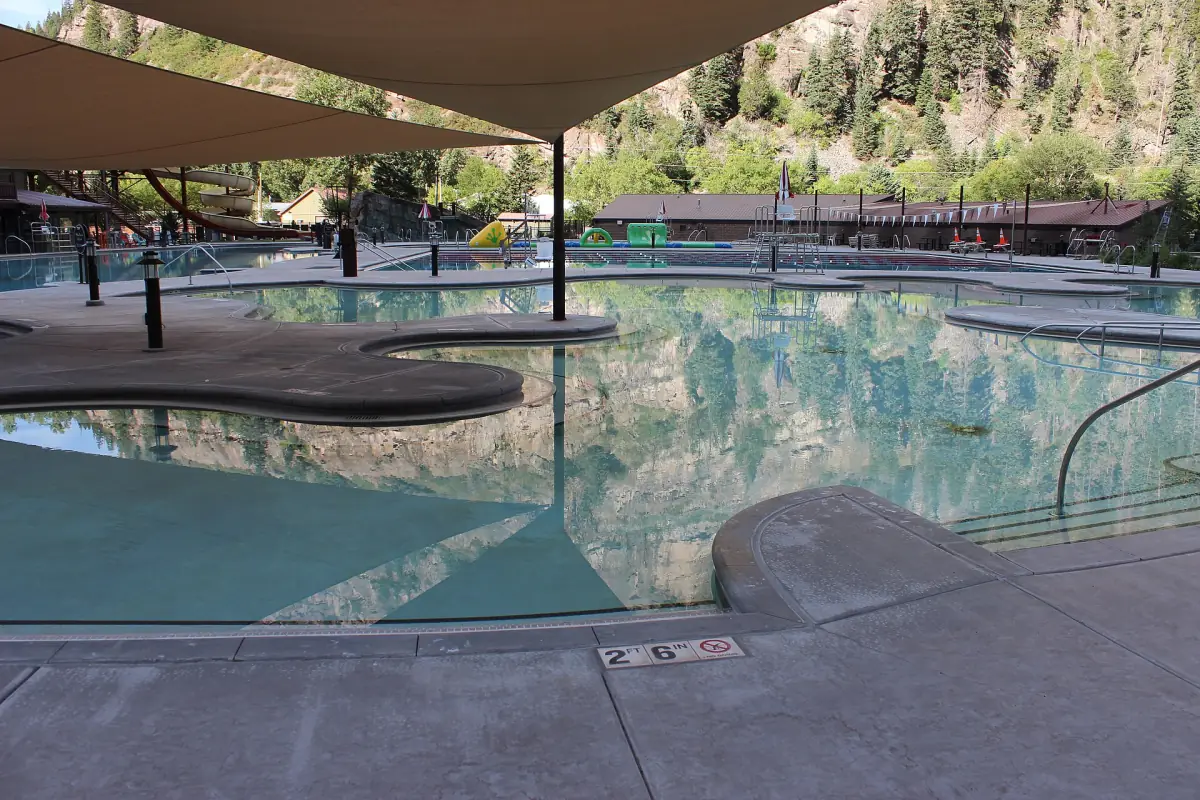
On July 4, 1927, the Ouray Hot Springs Pool opened, paid for with citizen memberships and money from local businesses. That's the whole town passing the offering plate, and instead of a new church roof they got a swimming pool.
And in 1986 the town elected C. W. McCall, the singer of "Convoy" and "Black Bear Road," as mayor. His real name is Bill Fries, and he served six years. The guy who sang about a road you can drive out of town ended up running the town.
Visiting Ouray today
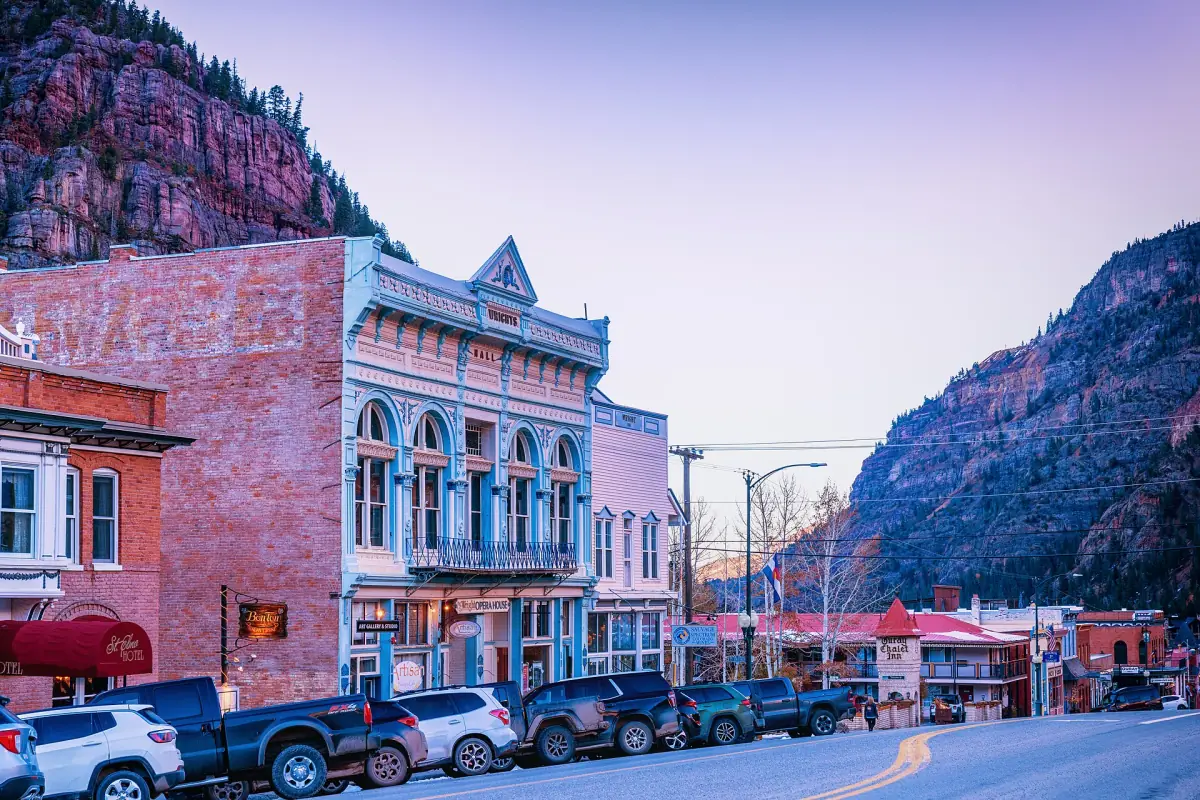
Ouray sits at 7,792 feet on US 550, about 40 miles south of Montrose. It's the start of Camp Bird Road and the base for Yankee Boy Basin, Imogene Pass, Engineer Pass and Black Bear. Main Street is a National Historic District, and the Ouray County Historical Society and Museum is in the old St. Joseph's Miners' Hospital. That museum is a good place to learn more of the Ute history this page only starts.