At a glance
- What it is
- Colorado's tallest waterfall, above Telluride, with a 1907 power plant and house on top.
- The story
- The powerhouse ran the Smuggler-Union mine. In 1978 the frozen falls got their first ice climb, shown on ABC's Wide World of Sports.
- Getting there
- Black Bear Pass passes it, one way downhill to Telluride, usually from late July. Or hike about two miles up from Telluride. The powerhouse is fenced and private.
A mine boss once put a skull in a shop window to blame a union for a murder. The man the skull supposedly belonged to was alive. That same boss, Bulkeley Wells, is the reason there's a little power plant and a house sitting on top of Colorado's tallest waterfall.
Buckshot through one window, a skull in another
Start with the man before him. Arthur L. Collins was general manager of the Smuggler-Union Mining Company in Telluride. He brought in a Cornish "contract" system, which paid miners by the piece, and the local Western Federation of Miners union opposed it. In November 1902 someone fired buckshot through a window of his home and killed him. The killer was never identified.
Bulkeley Wells took over as president and manager. He was born in Chicago, went to Roxbury Latin and Harvard, and married into the wealthy Livermore family. He also headed the anti-union San Miguel County Citizens' Alliance and was a captain in the Colorado National Guard. That's a lot of hats for one guy in the middle of a labor war.
Then he got creative. To pin a murder on the union, Wells put a skull in a shop window under a sign about the union's "Grewsome Work." The supposed victim, a mine guard named William J. Barney, was not dead. It's Weekend at Bernie's in reverse: instead of pretending a dead guy is alive, he pretended a live guy was dead.
Later, dynamite went off below the porch where Wells was sleeping. He got away with minor injuries and blamed union members. One historian isn't buying it.
some pretty good evidence that he blew it up himself to generate sympathy or frame the minersHistorian Lannon, quoted in the Colorado Springs Gazette, 2024
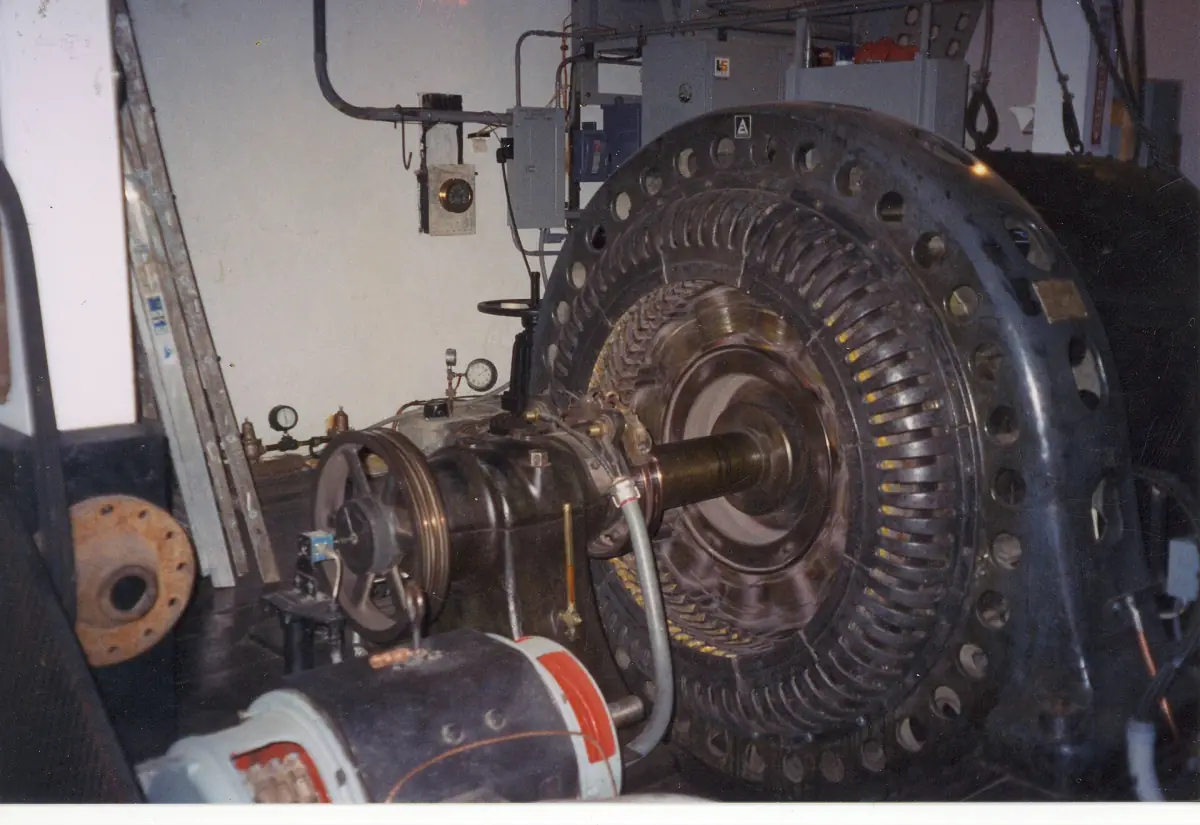
The Tesla story belongs to a different plant
Quick detour, because this mix-up is everywhere. The famous Tesla milestone is the Ames Hydroelectric Generating Plant near Ophir, more than 10 miles away. Ames went into service on June 19, 1891, for L. L. Nunn's Gold King Mine. It used Westinghouse alternators and a small starter motor built on Tesla's patent, and it sent power 2.6 miles. The IEEE (the big electrical engineering society) dedicated it as an official milestone in 1988.
The Bridal Veil powerhouse is the 1907 Smuggler-Union plant. Its 1977 National Register paperwork claims it made the first alternating current used for industry in the United States. Ames beat it by 16 years.
A summer home on the lip of a 365-foot waterfall
Wells, as local manager, started the project, talked his bosses into it and pushed it through. The generator was dragged up with horses and block-and-tackle (ropes and pulleys). The plant opened in 1907. Part of its water came by flume from Blue Lake, four miles away and 3,000 feet higher, and the power ran 2,000 feet down the cliff to the mines. The road was impassable in winter, so an aerial tramway hauled men and supplies up the cliff. Horses and pulleys to put a power plant on the edge of a cliff. Gangster.
Wells used the house at the top of Bridal Veil Falls as his summer home until the 1920s. A private house on top of the company power plant, on top of the tallest waterfall in the state, is the corner office every middle manager daydreams about at 3 p.m. on a Thursday.
It didn't last. In 1918 his wife, Grace Livermore Wells, divorced him, and he lost $15 million in mining interests. He lost the rest of his money after that. On May 26, 1931, he died by suicide in San Francisco. He was 59.
Vandals, a 99-year lease and a restart
In 1953 the Idarado Mining Company found it cheaper to buy power from coal plants and shut the powerhouse down. By the late 1970s vandals had wrecked it. In 1977 Roger Neville Williams of the San Miguel Historical Society wrote the National Register nomination, and it put things plainly.
The Powerhouse is also the last vestige of the old Smuggler-Union Company; all other structures have been destroyed.National Register of Historic Places nomination, San Miguel Historical Society, 1977
The plant was listed on the National Register of Historic Places in 1979 (one newspaper says 1978). In 1988 a local named Eric Jacobson took a 99-year lease from Idarado. He got the plant running again in 1991 with a 2,300-volt Westinghouse generator and raised three kids in the house. He gave up the lease in 2010, citing regulation and legal problems.
Is it making power today? The sources don't agree. One Wikipedia article says Idarado runs it and it supplies about 25 percent of Telluride's power. Another says Idarado hasn't kept it running since 2010. I couldn't settle it, so I'm not going to pretend I did.
Visiting Bridal Veil Falls today
Most drivers see the falls from Black Bear Pass, which runs one way, downhill only, from Red Mountain Pass to Telluride and passes the falls on its switchbacks. From town it's about a two-mile hike up the road or the Bridal Veil Falls Trail. The powerhouse is fenced off and the land around it is private. Ice climbing on the falls is not allowed.